If you’ve ever received the 👀 emoji from a girl and paused to wonder “What does that mean?”, you’re not alone. The eyes emoji is one of the most searched symbols in modern texting because its meaning isn’t always straightforward. Depending on context, tone, and relationship, 👀 can signal curiosity, interest, teasing, suspicion, or even flirtation.
People search for the 👀 meaning in text from a girl because emojis often carry emotional subtext that words alone don’t capture. A single emoji can change the entire mood of a message.
This article breaks down exactly what 👀 means, where it came from, how girls commonly use it across platforms, and how you should respond. By the end, you’ll read this emoji like a pro—no overthinking required.
What Does 👀 Mean in Text & Chat?
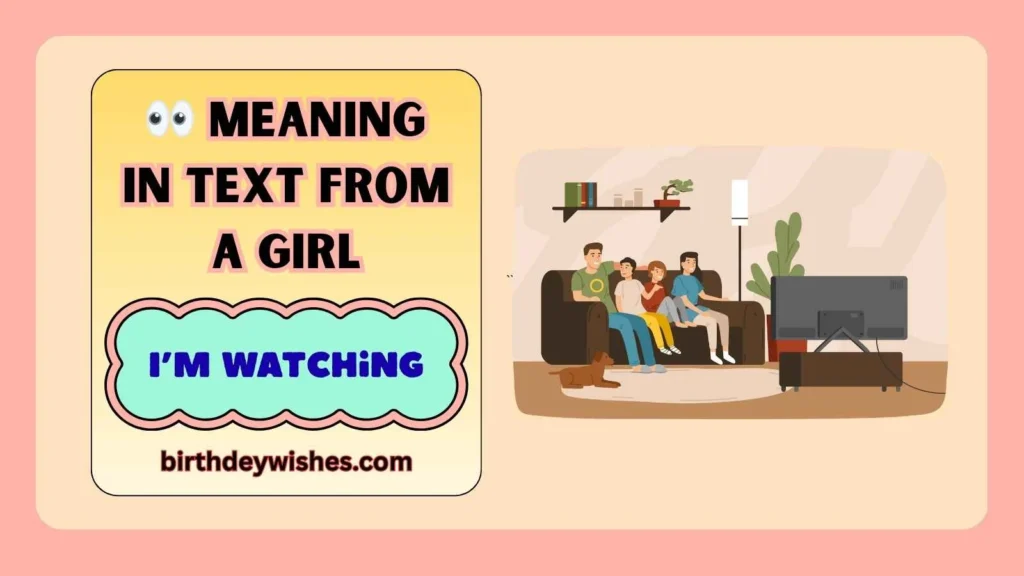
In texting and online chats, 👀 generally means “I’m watching,” “I noticed that,” or “Tell me more.” When a girl sends it, the meaning often leans toward emotional awareness rather than literal observation.
Common implied meanings include:
- Paying close attention
- Reacting to drama or gossip
- Showing interest or curiosity
- Playful suspicion
- Silent judgment or teasing
The key factor is context. If you said something bold or interesting and she replies with 👀, it usually means she’s intrigued. If it follows a questionable message, it might signal “Hmm, really?”
Tone matters too. Alone, 👀 is more mysterious. Paired with text, its meaning becomes clearer. For example, “Oh really 👀” feels playful, while just 👀 can feel suspenseful or flirty.
Full Form, Stands For & Short Meaning of 👀
Emojis don’t have official “full forms,” but 👀 is commonly interpreted as:
Short meaning:
👉 Watching / Noticing / Interested
What it stands for in casual use:
- “I see what you did”
- “I’m paying attention”
- “That caught my interest”
- “Spill the tea”
Unlike abbreviations, 👀 relies entirely on emotional context rather than a fixed definition.
Origin, History & First Known Use of 👀
The 👀 emoji was introduced as part of Unicode 6.0 in 2010. Originally, it simply represented a pair of eyes. Over time, social media transformed its meaning.
As texting culture evolved, people began using 👀 metaphorically—to show curiosity, attention, or reaction without words. Platforms like Twitter, Instagram, and Snapchat accelerated its popularity, especially in reaction-based communication.
Today, 👀 is less about eyesight and more about awareness and reaction.
How People Use 👀 in Daily Conversations
In everyday chats, 👀 acts like a reaction emoji. Girls often use it to:
- Respond without committing to words
- Tease or flirt subtly
- React to surprising news
- Signal interest without being direct
It’s popular because it’s flexible and low-effort, yet expressive.
👀 Meaning Across WhatsApp, Instagram, TikTok & Snapchat
The meaning stays similar, but usage changes slightly by platform:
- WhatsApp: Curiosity, suspicion, or teasing in private chats
- Instagram: Reacting to stories, flirting, or showing interest
- TikTok: Watching drama, hinting “I see that,” or teasing comments
- Snapchat: Silent reaction, interest, or playful judgment
On visual platforms, 👀 often feels more dramatic or flirty.
Different Meanings of 👀 in Other Fields
Outside texting:
- Marketing: “Watch this space”
- Pop culture: Drama or anticipation
- Gaming: Spectating or lurking
Still, its emotional core—attention—remains the same.
Common Confusions, Mistakes & Wrong Interpretations
Many people overthink 👀. Common mistakes include:
- Assuming it always means flirting
- Thinking it’s negative by default
- Ignoring the message context
👀 is neutral until context gives it direction.
Similar Terms, Alternatives & Related Slang
Related emojis and slang:
- 👁️👁️ – Intense watching
- 🤨 – Suspicion
- 😏 – Flirtation
- “I see you”
- “Noted”
Internal linking suggestion:
👉 Link to articles like “😏 meaning in text” or “🤨 emoji meaning”
Examples of 👀 in Real Chat Situations
Quick, real-life examples:
- “Guess who texted me today 👀”
- “You really said that 👀😂”
- “Ohhh okay 👀”
- “I saw your story 👀✨”
Each one shifts meaning slightly based on tone.
How to Reply When Someone Says 👀
Your response should match the vibe:
- Curious reply: “What’s up? 😄”
- Playful: “Don’t look at me like that 👀😂”
- Flirty: “Like what you see? 😉”
- Clarifying: “What does that mean? 😅”
Mirroring energy usually works best.
Is 👀 Still Popular? Trends & Online Usage
Yes—👀 is still very popular. It thrives because:
- It’s versatile
- It works across platforms
- It fits short-form communication
Trends show it’s especially common among Gen Z and Millennials, often used in ironic or playful ways.
FAQs:
1. Does 👀 from a girl always mean interest?
No. It can mean curiosity, teasing, or simply noticing something.
2. Is 👀 flirty or sarcastic?
It can be either—context and tone decide.
3. What does 👀 mean when sent alone?
Usually silent curiosity or “I’m watching.”
4. Is 👀 a red flag emoji?
Not inherently. It’s neutral unless paired with negative context.
5. How should I respond if I’m unsure?
Ask playfully or clarify with humor.
Conclusion
The 👀 meaning in text from a girl isn’t fixed—it’s flexible, expressive, and deeply tied to context. Most often, it signals attention, curiosity, or playful awareness rather than anything negative.
Whether she’s flirting, teasing, or simply reacting, 👀 is her way of saying “I noticed that” without spelling it out.
Instead of overanalyzing, focus on the surrounding conversation and your relationship with her. When in doubt, respond naturally and match her tone.
Emojis are meant to simplify communication, not complicate it. Once you understand 👀, you’ll stop guessing—and start responding with confidence.