Understanding internet slang is essential in today’s fast-moving digital culture. One term that often confuses people is DYHM, and because it appears in emotional or high-context chats, getting its meaning wrong can completely change how a conversation feels.
This article is the most comprehensive guide online to the DYHM meaning in text, its origin, variations, real examples, usage on different platforms, confusions, replies, and trends.
Short paragraphs, deep explanations, and beginner-friendly readability make this blog perfect for anyone trying to understand modern chat abbreviations.
What Does DYHM Mean in Text & Chat?
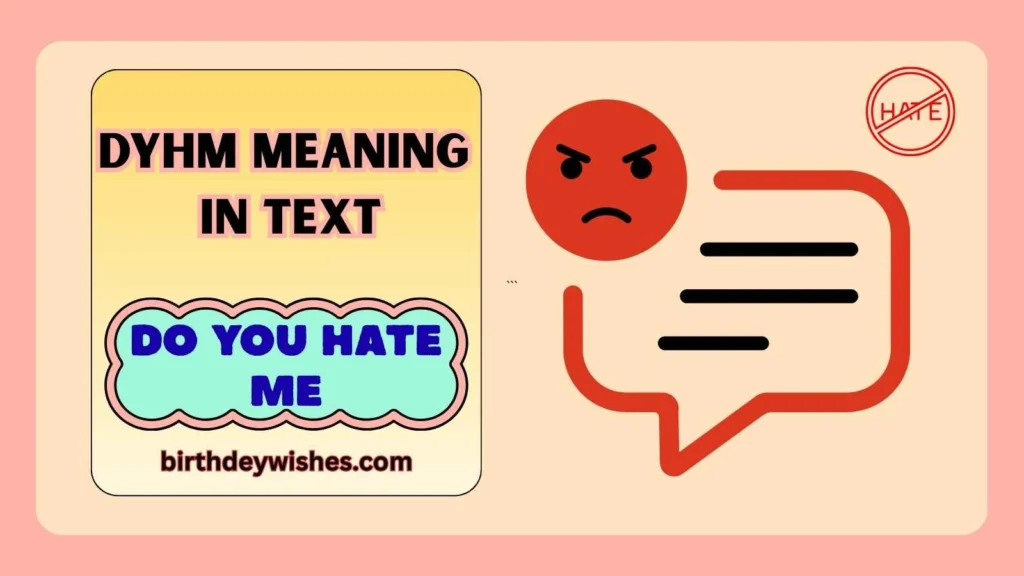
The primary and widely accepted meaning of DYHM in texting is:
➡️ DYHM = “Do You Hate Me?”
It is an emotional, vulnerable, sometimes playful shorthand people use when they are unsure of someone’s feelings or worried they may have upset the other person.
In digital communication—where tone can be lost easily—abbreviations like DYHM help people express fear, anxiety, or self-doubt without typing long paragraphs.
Why People Use “DYHM”
People often use DYHM when:
- Someone takes too long to reply
- A joke goes too far
- They fear they hurt someone emotionally
- They sense tension in conversation
- They’re feeling insecure or anxious
- They want reassurance
- They’re playfully teasing someone
Short Interpretation
At its core, DYHM asks:
“Are you mad at me?”
“Did I do something wrong?”
“Are we okay?”
Unlike aggressive expressions, DYHM is soft, emotional, and self-doubting, which is why it appears frequently in friendships, relationships, and close family chats.
Typical Scenarios
- “I didn’t reply for hours.”
- “I said something wrong.”
- “I teased them too much.”
- “I feel guilty but don’t know how they feel.”
Example chat:
A: “Sorry if my message earlier was too much 😟”
B: “No no, it’s fine!”
A: “Promise?? DYHM? 😭”
This shows how DYHM communicates insecurity in a relatable way.
Full Form, Stands For & Short Meaning of DYHM
Here’s a quick reference table:
| Term | Meaning | Tone | Usage Level |
|---|---|---|---|
| DYHM | Do You Hate Me? | Emotional, insecure, playful | Medium |
| Category | Chat slang, internet abbreviation | ||
| Alternatives | AYMM (Are You Mad at Me), RUM? (Are You Mad?) |
Full Meaning Breakdown
- D – Do
- Y – You
- H – Hate
- M – Me
Short Meaning
A quick emotional check-in, equivalent to:
- “Did I annoy you?”
- “Did I upset you?”
- “Is something wrong between us?”
Tone & Emotion
DYHM usually expresses:
- Insecurity
- Anxiety
- Concern
- Affection
- Playfulness
- Fear of conflict
It’s not a harsh phrase—it’s a reassurance request.
Where It’s Most Common
- Teen conversations
- Couple chats
- Close friends
- Emotional discussions
- Playful teasing
Origin, History & First Known Use of DYHM
Unlike LOL or OMG, which have documented early usage, DYHM is newer slang that emerged organically through texting culture.
Timeline of DYHM’s Evolution
Early 2010s:
Growth of smartphones and chat apps increased usage of emotional abbreviations. People wanted shorthand for deeper feelings.
Mid-2010s:
Messaging apps like Tumblr, Kik, WhatsApp & Instagram DMs made emotional chats common—phrases like “Do you hate me?” became meme formats.
Late 2010s:
TikTok and Snapchat popularized humorous, exaggerated emotional slang (“Why didn’t you reply in 5 minutes? DYHM?? 😭”).
2020s:
Gen Z adopted DYHM widely as part of “soft emotional slang.”
Why It Became Popular
- Modern communication is fast, emotional, and abbreviated.
- People express vulnerability more openly online.
- Emojis + slang = quicker emotional expression.
- Memes amplified dramatic emotional phrases.
DYHM in Digital Culture
Because texting removes verbal tone, people needed an abbreviation that conveys emotional insecurity clearly. DYHM filled this gap perfectly. Its dramatic flair also made it meme-friendly, helping it spread even faster.
How People Use DYHM in Daily Conversations
People use DYHM for multiple emotional reasons. Below are the most common usage types:
Playful Teasing
When a friend playfully annoys someone:
- “Ate your snacks 🤭 DYHM?”
- “I forgot your charger again 😅 DYHM?”
Emotional Concern
Used in real emotional situations:
- “I’m really sorry about earlier… DYHM?”
After Being Ignored
When someone leaves you “on seen”:
- “Hello?? You alive?? DYHM?? 😭”
Relationship Anxiety
Common in romantic relationships:
- “Tell me if I did something wrong.. DYHM?”
Overthinking Moments
Used during self-doubt:
- “Was that message too much? DYHM?”
Case Study: The Silent Treatment
Context:
Sara messaged her best friend a joke. Her friend didn’t reply for 3 hours.
Sara: “Did my joke sound rude?”
Sara: “DYHM? 😢”
This shows how DYHM reveals anxiety and longing for reassurance.
Case Study: Relationship Tension
Alex: “I hope you’re not upset about yesterday.”
Alex: “DYHM?”
Partner: “No, not at all. Just tired.”
Here, DYHM prevents the tension from growing.
DYHM Meaning Across WhatsApp, Instagram, TikTok & Snapchat
The core meaning stays the same everywhere, but usage differs slightly by platform.
- Used in personal, deeper chats
- Appears in family chats too
- Often paired with long emotional messages
Example:
“Mom, sorry I forgot to call… DYHM?”
- Common in comments and stories
- Often used humorously under memes
Example:
“When your bestie posts without tagging you… DYHM? 😭”
TikTok
- Frequently used as a dramatic reaction caption
- Trending audio clips often include phrases like DYHM
Example:
“POV: she didn’t reply in 2 minutes… ‘DYHM?’”
Snapchat
- Appears when someone breaks streaks
- Used in photo-based emotional messages
Example:
Snap of sad face → “DYHM?”
Messenger & iMessage
- Used in long-term friendships
- More common in emotional tone-checking situations
Usage Intensity Table
| Platform | How Common | Tone |
|---|---|---|
| Snapchat | High | Emotional, dramatic |
| TikTok | High | Humorous, meme-like |
| Medium | Playful | |
| Medium | Serious/emotional | |
| Messenger | Low-Medium | Straightforward |
| Rare | Logical discussions |
Different Meanings of DYHM in Other Fields
Although rare, DYHM can have alternate meanings depending on context.
1. DYHM = Did You Hear Me?
Used when someone feels ignored.
Example:
“Did you hear what I said? DYHM?”
2. DYHM = Do You Help Me?
Used in non-native English conversations.
3. Business/Project Abbreviations
Some teams may use DYHM to label certain files or forms, but this is not mainstream.
4. Regional Interpretations
Some cultural groups reinterpret abbreviations differently, but the primary meaning remains “Do You Hate Me?”
Context Determines the Meaning
If used in an emotional conversation, it always means “Do You Hate Me?”
Common Confusions, Mistakes & Wrong Interpretations
People frequently misunderstand DYHM. Here are the most common errors:
❌ Thinking it’s aggressive
Some believe it’s confrontational, but it’s actually vulnerable.
❌ Confusing it with DM/PM
Some think DYHM relates to “Direct Message,” but it’s unrelated.
❌ Misreading it as “Do you hit me?”
A wrong assumption made by English learners.
❌ Thinking it’s formal
DYHM is ONLY informal slang.
Language Learner Mistakes Table
| Mistake | Why It Happens | Correct Meaning |
|---|---|---|
| “Do you hug me?” | Guessing unknown slang | Do You Hate Me |
| “Direct You Hate Message” | Similar to DM | Do You Hate Me |
| “Do You Hear Me” | Alternate meaning | Contextual |
Similar Terms, Alternatives & Related Slang
Here are related emotional slang abbreviations:
Similar Emotional Abbreviations
- AYMM – Are You Mad at Me?
- RUM? – Are You Mad?
- RUOK? – Are You Okay?
- IMY – I Miss You
- IDC – I Don’t Care
- IDK – I Don’t Know
- ILYSM – I Love You So Much
Alternatives to Say the Same Thing
- “Did I upset you?”
- “Are you angry with me?”
- “I hope you’re not mad.”
- “Is everything okay?”
Slang with Similar Emotional Energy
- “Bruh??” (panic tone)
- “Bestie pls.”
- “Cry about it 😭” (humorous insecurity)
Examples of DYHM in Real Chat Situations
Here are various chat examples showing real contexts:
Playful Examples
- “I ate all the fries 😅 DYHM?”
- “Forgot your birthday gift… DYHM? 🤦♂️”
Emotional Examples
- “I didn’t mean to sound harsh. DYHM?”
- “If I crossed a line, I’m sorry… DYHM?”
Flirty Examples
- “Did I flirt too much? 😳 DYHM?”
- “I hope I didn’t make things weird… DYHM?”
Friendship Examples
- “Three hours without replying? DYHM?? 😭 bestie??”
Family Examples
- “Sorry mom I woke up late 😔 DYHM?”
Case Study: The Delayed Reply
Context:
Mike texted his crush. She read the message and didn’t reply.
Mike:
“Did I say something wrong?”
“DYHM? 😟”
Hours later…
She:
“Not at all! I was in a meeting 😭 You’re fine.”
DYHM helped communicate fear without being confrontational.
How to Reply When Someone Says DYHM
Your reply must match the emotional situation.
Reassuring Replies
- “No! Not at all 🤍 Why would you think that?”
- “Never. Everything is good!”
Playful Replies
- “Maybe… 😏 Just kidding 😂”
- “Of course not, drama queen 😭”
Supportive Replies
- “I’m not upset. Talk to me.”
- “Let’s clear the misunderstanding.”
Honest Replies
- “I’m not mad, but I need time.”
- “You didn’t upset me. I’m just stressed.”
Flirty Replies
- “Hate you? Impossible 😉”
- “Never. You mean too much.”
Professional-ish Replies (when used accidentally)
- “No, I’m not upset. All good.”
Is DYHM Still Popular? Trends & Online Usage
DYHM is not the most widely used slang, but it is still popular—especially among Gen Z and teens.
Who Uses DYHM the Most?
| Age Group | Frequency | Reason |
|---|---|---|
| Teens | High | Emotional slang, memes |
| Gen Z adults | Medium-High | Playful communication |
| Millennials | Medium | Relationship chats |
| Older adults | Low | Less slang usage |
Why It Remains Popular
- Emotional vulnerability is normalized
- Social media humor encourages dramatic expressions
- Short-form communication dominates
- Memes continuously recycle emotional slang
Trends
- Used with crying emojis 😭😭
- Often paired with dramatic audio on TikTok
- Appears in skits about overthinking
- Used in reaction screenshots
DYHM is not fading anytime soon.
FAQs:
What does DYHM mean in text?
It means “Do You Hate Me?”, used to ask if someone is upset.
Is DYHM a rude abbreviation?
No. It’s emotional and vulnerable, not offensive.
What does DYHM mean on Snapchat?
Same meaning—often used when someone breaks a streak or ignores snaps.
Is DYHM a Gen Z slang?
Yes, mostly used by teens and young adults.
How do you use DYHM naturally?
Example: “Sorry if my message sounded off earlier… DYHM?”
Conclusion:
Understanding the DYHM meaning in text helps you navigate emotional conversations with more clarity and confidence. In a world where digital communication often loses tone, people rely on abbreviations like DYHM to express insecurity, vulnerability, or playful concern quickly.
This phrase is short but emotionally rich. Whether used jokingly or sincerely, it gives the sender a chance to check if everything is okay without sending long messages.
From friendships to relationships, from WhatsApp to TikTok, DYHM continues to be a modern shorthand for emotional reassurance.
If you encounter it, now you’ll know exactly what the sender means—and how to respond in a thoughtful, empathetic way.