Understanding the GIF meaning in text has become essential in today’s digital world. Whether you chat on WhatsApp, scroll Instagram comments, or respond to TikTok clips, you’ve surely seen GIFs popping up everywhere. But what does GIF really mean in texting? Why do people use it so often? And how does it differ across different platforms?
This in-depth guide breaks down everything you need to know about GIFs in texting—from their meaning and origin to case studies, chat examples, usage trends, and how to reply when someone sends a GIF.
Let’s dive deep into the world of GIFs.
What Does GIF Mean in Text & Chat?
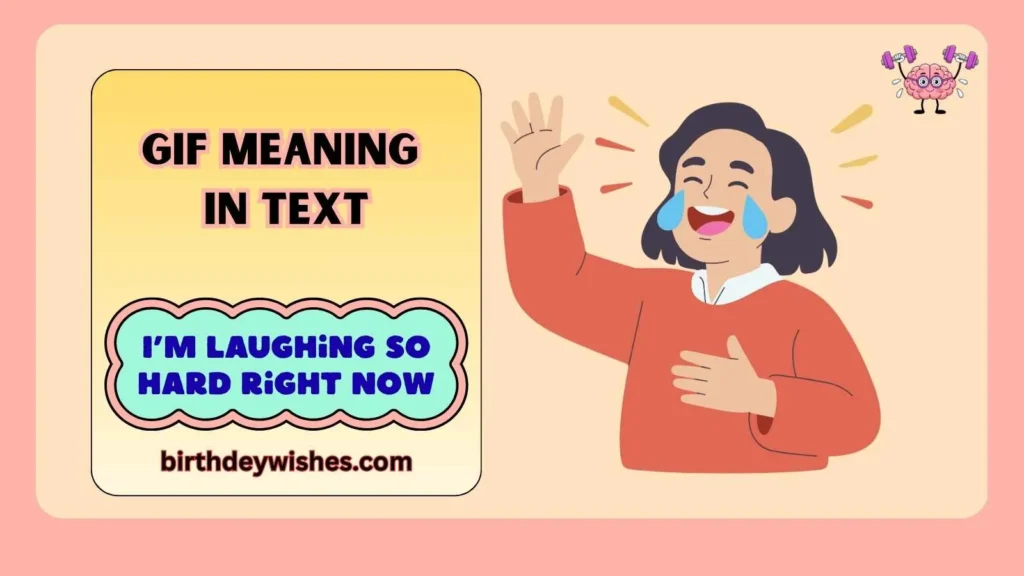
When people type “GIF” in text, they are referring to an animated image—usually a short, looping clip used to express reactions or emotions quickly.
A GIF in text acts as a visual response. Instead of typing:
“I’m laughing so hard right now.”
People send a GIF of someone laughing, falling over, or a celebrity giggling.
Why GIFs Matter in Chat
GIFs help:
- Express emotions instantly
- Add humor and personality
- Make conversations more visual
- Reduce misunderstandings in tone
- Strengthen social connections
In Simple Terms:
A GIF in texting = a reaction image that moves.
People use it when words aren’t enough—or when they want a more fun and expressive response.
Full Form, Stands For & Short Meaning of GIF
Here’s the clear breakdown:
| Term | Meaning |
|---|---|
| Full Form | Graphics Interchange Format |
| Short Meaning | A looping animated image |
| Used In Text As | Reaction, emotion, expression, humor |
| Pronunciation | “gif” (hard G) or “jif” (soft G) |
The Three-Letter Breakdown
- G – Graphics: Visual content
- I – Interchange: Designed for sharing
- F – Format: File type
Short Meaning for Everyday Use
A GIF is basically a short animation used in conversations to express reactions without typing long messages.
GIFs sit between an emoji and a short video, making them perfect for texting.
Origin, History & First Known Use of GIF
GIFs weren’t born on social media—they have a long technical history.
Early Creation
- Year Created: 1987
- Inventor: Steve Wilhite, a computer scientist at CompuServe
- Why It Was Created: To compress images so they could load quickly on slow internet connections
Evolution Timeline
| Year | Milestone |
|---|---|
| 1987 | GIF format invented |
| 1990–2000 | Used in early websites and banner ads |
| 2010–2014 | Massive comeback via Tumblr, Reddit |
| 2015 | Twitter and Facebook add built-in GIF search |
| 2017 | WhatsApp integrates GIF keyboard |
| 2020+ | GIFs become global reaction language |
A Fun Historical Quote
Steve Wilhite once famously said:
“The Oxford Dictionary accepts both pronunciations. They are wrong. It is pronounced ‘JIF.’”
Still, most of the internet uses the hard “G”—and both are accepted today.
Why GIFs Returned Strong
- Faster internet
- Popular meme culture
- Visual-first communication
- Shorter attention spans
- Built-in GIF search tools in apps
GIFs rose from an old technical format to a cultural communication tool used by billions.
How People Use GIF in Daily Conversations
GIFs add life to conversations. Here are the most common uses:
To Express Emotions
- Laughter
- Shock
- Anger
- Sadness
- Happiness
- Embarrassment
To React Without Words
Examples:
- Someone shares big news → you send a clapping GIF
- Someone jokes → you reply with a laughing GIF
- Someone annoys you → you send a side-eye GIF
To Show Tone
Written text is often misunderstood. GIFs solve this with visual clarity.
To Add Humor
Many people use funny movie or celebrity GIFs to make chats entertaining.
To Replace Long Replies
Instead of typing paragraphs, a GIF conveys the same meaning in seconds.
GIF Meaning Across WhatsApp, Instagram, TikTok & Snapchat
Different platforms use GIFs in slightly different ways.
GIFs on WhatsApp
- Found inside the emoji keyboard
- Used heavily in family and group chats
- Common for reactions and jokes
- Supports sending trending GIFs via GIPHY
Most WhatsApp GIFs express emotions—joy, frustration, sarcasm, or celebration.
GIFs on Instagram
- Used as story stickers
- Sent inside DMs
- Added to comments during live broadcasts
- Used to decorate posts visually
Instagram users prefer aesthetic, stylish, or expressive GIFs.
GIFs on TikTok
- Used in comments under videos
- Used in video replies
- Creators often turn viral GIFs into meme content
TikTok GIFs tend to be modern, fast-paced, and meme-driven.
GIFs on Snapchat
- Stickers added to snaps
- Sent in chat when expressing quick reactions
- Used during streaks for fun visuals
Snapchat GIFs lean toward trendy, colorful, playful reactions.
Different Meanings of GIF in Other Fields
Though most people use GIFs for reactions, the word carries other meanings depending on the field.
In Graphic Design
- GIFs are used for lightweight animations
- Ideal for logos, banners, UI icons
- Limited color palette makes them simple but fast
In Web Development
- Used for micro-animations
- Helpful for guiding users (loading icons, indicators)
In Marketing
- Common in email campaigns
- Gets higher engagement than static images
- Helps explain features visually
In Education
- Demonstrates small steps of a process
- Helpful in tutorials (coding, cooking, craft demos)
In Technical Writing
- GIFs show recurring motion better than text descriptions
Common Confusions, Mistakes & Wrong Interpretations
Even though GIFs are common, people still mix them up with other visual formats.
GIF vs. Meme
- A GIF is animated
- A meme is usually a still image with text
- Many GIFs become memes, but they are not the same thing
GIF vs. Video
- GIFs loop automatically
- Videos have sound
- GIFs are shorter and silent
GIF vs. Sticker
- Stickers may be static or animated
- Stickers are often cartoonish
- GIFs are usually real-life reactions from movies, shows, or celebrities
GIF vs. Emoji
- Emojis are simple icons
- GIFs are more expressive and detailed
Mispronunciation Debate
Both GIF (hard G) and JIF (soft G) are used.
Similar Terms, Alternatives & Related Slang
Here are commonly associated terms:
Similar Visual Reaction Terms
- Meme
- Sticker
- Emoji
- Reaction pic
- Clip
- Short loop
- Reels / Shorts (longer formats)
Related Chat Slang
You can internally link this to abbreviation pages such as:
- LOL meaning
- OMG meaning
- IDC meaning
- BRB meaning
- TTYL meaning
Quotes Relevant to GIF Culture
“A GIF expresses what a whole sentence sometimes can’t.”
“GIFs are the emojis of modern emotions.”
Examples of GIF in Real Chat Situations
Short, real-life chat examples with emojis for clarity.
Reaction to Good News
Friend: I got the job!
You: sends cheering GIF 🎉
Feeling Lazy
Friend: Come outside, we’re waiting.
You: sends sleepy cat GIF 😴
Flirting
Crush: You look good today.
You: sends shy blushing GIF 😊
Group Chat
Friend 1: Who’s ready for the trip?
Friend 2: excited dance GIF
You: same GIF for fun 💃
Sarcasm
Coworker: Another meeting at 5 pm.
You: facepalm GIF 🤦♂️
GIFs help deliver tone perfectly.
How to Reply When Someone Sends a GIF
Here are smart, simple ways to reply:
Casual Replies
- “Haha that GIF is perfect 😂”
- “Sending one back!”
- “Love this GIF!”
- “Where did you find that? 😂”
Flirty Replies
- “Aww, that GIF is cute just like you 😉”
- “Smooth move. Here’s mine 😌”
Professional Replies
- “Nice GIF—well said.”
- “That sums it up perfectly.”
When Someone Sends GIF Instead of Text
You can reply with:
- “Say more?”
- “Explain that GIF for me?”
Is GIF Still Popular? Trends & Online Usage
Some people think GIFs are fading. But the data shows the opposite.
Why GIFs Are Still Strong
- Integrated into all major keyboards
- Faster and lighter than videos
- Work across apps and devices
- Perfect for reactions
- Used across all age groups
Trends That Boost GIF Popularity
- Meme culture
- Short-form video rise
- Expressive communication
- Celebrity and TV show reaction GIFs
- Social media challenges
A Quick Trend Table
| Trend | Impact on GIF Usage |
|---|---|
| Rise of emojis | Slightly reduces GIFs, but both coexist |
| Short videos (Reels/TikTok) | Increases GIF references in discussions |
| Memes | Often become GIFs and vice versa |
| Keyboard integrations | Makes GIF use effortless |
Case Study: Workplace Communication
A mid-sized tech company observed:
- 42% of employees preferred GIFs for expressing humor
- 30% felt GIFs improved team bonding
- 18% believed GIFs reduced miscommunication
In short, GIFs enhance workplace culture when used appropriately.
Case Study: Customer Support
A SaaS brand added GIFs to onboarding emails:
- Click-through rate increased by 27%
- Customer satisfaction rose by 15%
- Support tickets reduced for common questions
GIFs educate, entertain, and communicate faster.
Real-Life Scenarios Where GIFs Shine
Breaking Awkward Silence
A GIF can lighten the mood instantly.
Celebrating Wins
GIFs amplify joy—clapping, dancing, cheering.
Expressing Sarcasm
A sarcastic GIF cuts right to the point.
Reacting in Busy Moments
GIFs help respond when you don’t have time to type.
FAQs:
What does GIF mean in texting?
A GIF is a short looping animated image used to express reactions or emotions.
Is GIF considered a meme?
No, a GIF loops and usually has no text; memes are static images with captions.
Do all platforms support GIFs?
Most major platforms—WhatsApp, Instagram, TikTok, Snapchat, Twitter—fully support GIFs.
Why do people prefer GIFs over text?
Because GIFs show tone emotionally and visually, reducing misunderstandings.
Is sending GIFs unprofessional?
It depends on the context. Light GIFs are acceptable in casual workplace chats.
Conclusion:
The GIF meaning in text goes far beyond its technical definition. GIFs shape how we communicate online—through emotions, reactions, humor, and body language without words.
From WhatsApp group chats to Instagram DMs and TikTok comments, GIFs have become a universal digital language that connects people across cultures and platforms.
This guide explored everything—from the origin of GIFs, how they evolved, how different platforms use them, and how you can use GIFs correctly in both casual and professional contexts.
Whether you’re reacting, expressing feelings, making someone laugh, or simply replying quickly, GIFs enrich conversations and bring them to life.
Now that you fully understand the meaning of GIF in texting, you can use them confidently and creatively across all digital spaces.