“¿Qué pasó?” is a common Spanish phrase that many people see in chats, memes, and social media. Because of this, users often search for its exact meaning and how to use it correctly in conversations.
Whether you spotted it on WhatsApp, heard it in a movie, or received it in a message, understanding its tone is important.
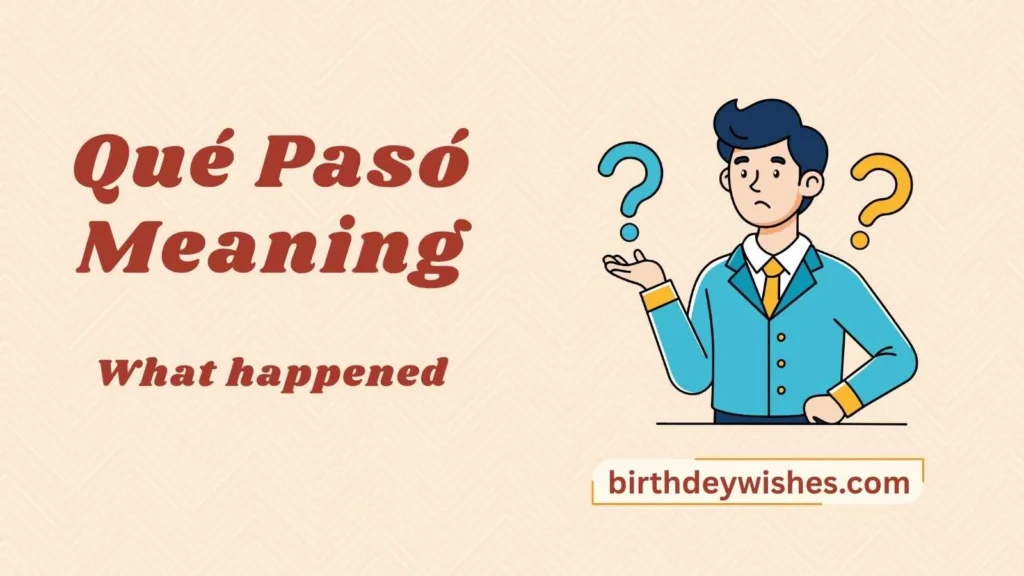
In simple terms, “¿Qué pasó?” translates to “What happened?” in English. However, its meaning can change slightly based on context, tone, and region.
It can express concern, curiosity, surprise, or even casual greeting. In this guide, you’ll learn everything about “que paso meaning,” including its usage in texting, origin, examples, and how to reply naturally.
What Does “Que Paso” Mean in Text & Chat?
In texting and online chats, “que paso” (or correctly written as “¿qué pasó?”) usually means “What happened?” or “What’s going on?”. People use it to ask about a situation, especially if something seems unusual.
It can also work as a casual check-in between friends.
Common meanings in chat:
- What happened?
- What’s wrong?
- What’s going on?
- Why did that happen?
Tone depends on context:
- Curious: “Que paso?” (just asking)
- Concerned: “Que paso?? 😟”
- Casual: “Que paso bro?”
Quick examples:
- “You didn’t reply yesterday, que paso?”
- “Hey, que paso? Everything okay?”
- “Que paso 😅 why so quiet?”
In short, it’s a flexible phrase that fits both serious and casual conversations.
Full Form, Stands For & Short Meaning of “Que Paso”
Unlike internet slang, “que paso” is not an acronym or abbreviation. It is a Spanish phrase made up of two words:
- Qué = What
- Pasó = Happened (past tense of “pasar”)
Short meaning:
👉 “What happened?”
Key points:
- Not a short form like “LOL” or “BRB”
- It’s a complete phrase on its own
- Often written without accents in casual typing: “que paso”
Variations:
- ¿Qué pasa? = What’s happening (present tense)
- ¿Qué pasó? = What happened (past tense)
People often confuse these, but both are correct in different situations.
Origin, History & First Known Use of “Que Paso”
“¿Qué pasó?” comes from the Spanish language, which has roots in Latin. The verb “pasar” means “to happen” or “to pass.” Over time, it became a common way to ask about events or situations.
This phrase has been used for centuries in Spanish-speaking countries like Mexico, Spain, and Colombia. It is part of everyday speech and appears in books, conversations, and media.
Why it became popular globally:
- Spanish is one of the most spoken languages in the world
- Movies, music, and TV shows spread common phrases
- Social media made it viral in memes and chats
Today, even non-Spanish speakers use “que paso” casually, especially online.
How People Use “Que Paso” in Daily Conversations
In real life, “¿Qué pasó?” is very natural and widely used. It can express concern, curiosity, or simply start a conversation.
Common daily uses:
- Asking about a problem
- Checking on a friend
- Reacting to unexpected news
- Starting a casual chat
Examples:
- “You look upset, ¿qué pasó?”
- “I heard something happened, ¿qué pasó?”
- “Hey man, ¿qué pasó?”
Tone variations:
- Friendly → relaxed and casual
- Serious → concerned and direct
- Playful → joking with friends
It’s a simple phrase, but tone makes a big difference.
“Que Paso” Meaning Across WhatsApp, Instagram, TikTok & Snapchat
On social media, “que paso” is widely used in comments, DMs, and captions. Its meaning stays similar but becomes more casual.
Platform usage:
- Used in private chats
- Example: “You disappeared 😅 que paso?”
- Used in comments or replies
- Example: “Que paso? No new posts!”
TikTok
- Often used in memes or reactions
- Example: “Que paso 😂 that plot twist!”
Snapchat
- Quick check-ins
- Example: “Que paso? Why no snaps?”
Social media tone:
- Informal
- Friendly
- Sometimes humorous
Different Meanings of “Que Paso” in Other Fields
While mainly conversational, “que paso” can take on slight variations depending on context.
Possible meanings:
- Literal: What happened?
- Emotional: What’s wrong?
- Casual: What’s up?
- Investigative: What went wrong?
In storytelling:
- Used to introduce conflict
- Example: “And then everyone asked, ‘¿qué pasó?’”
In pop culture:
- Often used for dramatic or funny reactions
Common Confusions, Mistakes & Wrong Interpretations
Many people misunderstand or misuse “que paso,” especially non-Spanish speakers.
Common mistakes:
- ❌ Writing “que paso” without context (can feel incomplete)
- ❌ Confusing with “qué pasa”
- ❌ Thinking it means “hello” only
Clarifications:
- “¿Qué pasó?” = What happened
- “¿Qué pasa?” = What’s happening
- It’s not always a greeting
Tip:
Use punctuation and tone to make meaning clear.
Similar Terms, Alternatives & Related Slang
If you want similar expressions, there are many alternatives in both Spanish and English.
Spanish alternatives:
- ¿Qué pasa? (What’s up?)
- ¿Qué ocurrió? (What occurred?)
- ¿Qué sucede? (What’s happening?)
English equivalents:
- What happened?
- What’s going on?
- What’s up?
- What’s wrong?
Slang variations:
- “What’s good?”
- “Yo, what happened?”
👉 Internal linking suggestion: Link this section to pages like “What Does ‘What’s Up’ Mean?” or “Common Chat Slang Guide.”
Examples of “Que Paso” in Real Chat Situations
Here are real-life style chat examples:
- “You didn’t come yesterday, que paso? 🤔”
- “Bro, que paso 😂 that was wild!”
- “Hey, que paso? Long time no talk!”
- “Que paso 😟 are you okay?”
- “Que paso!! Tell me everything 👀”
These show how tone changes meaning.
How to Reply When Someone Says “Que Paso”
Your reply depends on why they asked.
Something happened:
- “Nothing serious, just busy.”
- “I had a rough day.”
Casual:
- “Nothing much, just chilling 😎”
- “All good, what about you?”
Concerned:
- “Thanks for asking, I’m okay now ❤️”
Tips:
- Match tone
- Keep it simple
- Add emotion if needed
Is “Que Paso” Still Popular? Trends & Online Usage
Yes, “que paso” is still very popular. It remains common in both real-life and online conversations.
Why it’s trending:
- Short and easy to use
- Widely understood
- Used in memes and viral content
Current usage trends:
- Frequently seen in comments
- Used by bilingual users
- Common in casual chats
Its simplicity keeps it relevant across platforms.
FAQs
1. What does “que paso” mean in English?
It means “What happened?” or “What’s going on?”
2. Is “que paso” a greeting?
Sometimes, but mainly it asks about a situation.
3. What is the difference between “que paso” and “que pasa”?
“Que paso” = past (what happened)
“Que pasa” = present (what’s happening)
4. Can non-Spanish speakers use it?
Yes, it’s widely used and understood.
5. Is it formal or informal?
Mostly informal, used with friends or casually.
Conclusion
“Que paso meaning” is simple yet powerful. At its core, it means “What happened?” but its tone can shift based on how and where it’s used. From daily conversations to social media chats, it helps people express curiosity, concern, or casual interest.
Because it’s short and easy, it remains popular worldwide. Whether you’re chatting with friends or replying to a message, understanding this phrase helps you communicate naturally.
Just remember to match the tone and context for the best response.