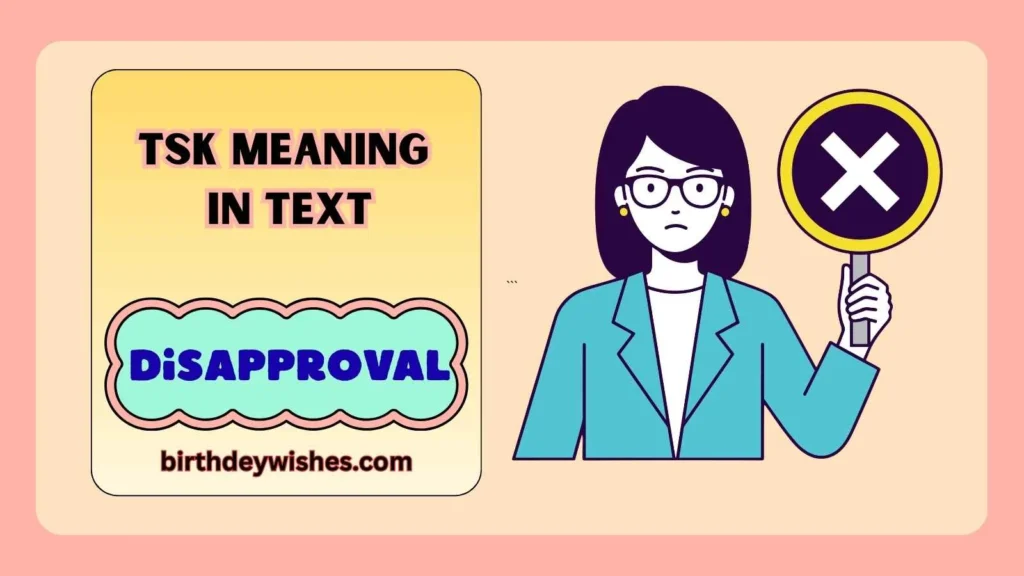
Understanding everyday chat expressions has become an important part of digital communication. One of the most misunderstood expressions today is “tsk.” While the term looks small, it carries deep emotional meaning and can completely change the tone of a conversation.
This comprehensive guide explores the tsk meaning in text, how the term evolved, why people use it, and how you can interpret it correctly in different chat situations.
This article goes beyond basic explanations—you’ll get origin details, examples, cultural usage, tables, real chat samples, and advanced insights so you can confidently understand and use tsk without miscommunication.
What Does Tsk Mean in Text & Chat?
The word “tsk” is a written representation of a tongue-clicking sound often made to show:
- Disapproval
- Annoyance
- Mild frustration
- Judgment
- Sarcasm
- Playful teasing
It is a simple but emotionally rich reaction that replaces longer phrases like:
- “I can’t believe you did that.”
- “That was disappointing.”
- “Really? Again?”
- “Seriously?”
The tsk meaning in text depends heavily on tone and context. Sometimes it’s playful, other times it can feel cold or irritated.
Common Emotional Intent Behind “Tsk”
| Tone | Meaning | Example |
|---|---|---|
| Playful teasing | Light humor | “Tsk tsk 😆 look who’s late.” |
| Annoyed | Mild irritation | “Tsk! You didn’t follow instructions.” |
| Judgmental | Moral disapproval | “Tsk… you really shouldn’t have done that.” |
| Disbelief | Surprised reaction | “Tsk, are you serious?” |
| Sarcastic | Mocking tone | “Tsk tsk, as expected 😏.” |
Key Insight
“Tsk” is a sound, not a word. It captures a quick emotional reaction that is difficult to express with standard text.
This is why millions of people use it across chats, social media, and direct messages.
Full Form, Stands For & Short Meaning of Tsk
One important clarification:
💡 “TSK” is not an acronym. There is no full form.
Unlike common chat abbreviations (LOL, IMO, BRB), tsk is a phonetic spelling of a sound made by clicking the tongue against the roof of the mouth.
Short Meaning of Tsk
- A short clicking sound expressing disapproval
- A mild scolding or teasing reaction
- A tone expressing disappointment
- A subtle expression of “Oh no…”
- A way to show disbelief without writing long sentences
Does Tsk Stand for Anything?
No. It stands for the sound itself.
Writers simply needed a way to represent this tongue-clicking noise, and “tsk” became the standard.
Variations You’ll See Online
| Version | Meaning |
|---|---|
| tsk | Mild reaction |
| tsk! | Stronger irritation |
| tsk tsk | Dramatic scolding |
| tssk | Drawn-out sound, often teasing |
| tsk-tsk | Old-fashioned written form |
Common Misconception
People often believe TSK is an abbreviation, but the truth is:
Tsk is a sound effect that conveys emotion through text.
Origin, History & First Known Use of “Tsk”
Understanding the origin of tsk helps explain why it feels so expressive.
Ancient Origins
Although “tsk” appears simple, the tongue-click sound is ancient. Linguistic research shows that:
- Early human speech included click sounds as expressive markers.
- Many African languages (like Xhosa and Zulu) still use click consonants today.
- The click used in “tsk” comes from a universal human sound of disapproval.
Entry into English Writing
The written form “tsk” appeared around the 17th century, often spelled as:
- tisk
- tisk-tisk
- tut
- tut-tut
Victorian-era authors used these sounds to show characters scolding or expressing frustration.
Modern Popularity
In the 20th century, “tsk tsk” became very common in:
- comic strips
- novels
- children’s books
- newspaper dialogues
When texting and instant messaging exploded, the word was shortened to “tsk” for convenience.
Why It Survived the Digital Age
The sound is:
- short
- emotional
- expressive
- universal
This makes “tsk” perfect for today’s fast-paced text messages.
How People Use “Tsk” in Daily Conversations
The tsk meaning in text depends entirely on context. People use it in several ways across casual and serious conversations.
1. Light Scolding
Used when someone does something silly or forgetful.
Examples:
- “Tsk, you forgot your wallet again.”
- “Tsk tsk 😅 always the same story.”
2. Expressing Disappointment
A quiet, gentle way to show disapproval.
Examples:
- “Tsk… I thought you’d take this more seriously.”
- “Tsk. That wasn’t cool.”
3. Teasing or Playful Banter
Friends often use “tsk” to mock or tease jokingly.
Examples:
- “Tsk tsk, look who’s finally awake 😂.”
- “Tsk! You’re trouble 😏.”
4. Annoyance or Irritation
This is the stronger form.
Examples:
- “Tsk! Stop ignoring my messages.”
- “Tsk, this is getting frustrating.”
5. Sarcasm & Mock Judgment
A dramatic version often used for fun.
Examples:
- “Tsk tsk, shame on you 😜.”
- “Tsk, just as I expected.”
6. As a Reaction Instead of Words
Someone may just type “tsk” without explanation—letting the sound speak for itself.
Tsk Meaning Across WhatsApp, Instagram, TikTok & Snapchat
Different platforms bring different tones and emotional contexts.
Used in:
- family groups
- friend chats
- casual conversations
Tone varies from light scolding to soft humor.
Example:
“Late again? Tsk 😆.”
Used in:
- comments
- DMs
- playful replies
Often sarcastic or dramatic.
Example:
“Tsk tsk skipping gym again? 😏”
TikTok
Tsk appears in:
- captions
- reply threads
- reactions to videos
Often used with sass or irony.
Example:
“Tsk y’all need help 😂.”
Snapchat
Common in snaps with emojis.
Example:
Tsk 😒 look at this mess.
Different Meanings of “Tsk” in Other Fields
Not all uses of “TSK” relate to texting.
Here are alternate contexts:
Linguistics
- Represents a click consonant.
- Used when transcribing tongue-click sounds.
Science & Genetics
- “TSK” can refer to Thrombospondin Type I Domain-Containing Protein (a gene).
Travel / Station Codes
- Some locations may use “TSK” as a code identifier.
Writers & Authors
- Use “tsk” to show characters clicking their tongues in frustration.
Online Communities
- Gamers use “tsk” humorously when teammates make mistakes.
Important Note:
These alternate meanings rarely appear in casual conversations. They appear in specialized contexts only.
Common Confusions, Mistakes & Wrong Interpretations
Even though tsk meaning in text is simple, people still misunderstand it.
1. Thinking Tsk is Always Rude
Not true. Tone varies based on context.
2. Confusing Tsk with Tut-Tut
They mean the same, but “tut-tut” is more old-fashioned.
3. Believing Tsk is an Acronym
It is not.
4. Reading Too Much Into It
Some people assume the sender is angry when they may only be teasing.
5. Overusing It
Too many “tsk” messages can sound passive-aggressive.
Similar Terms, Alternatives & Related Slang
If you want to replace or interpret “tsk”, here are similar expressions:
Emotion-Based Alternatives
- sigh
- ugh
- smh
- bruh
- wow… really?
- oh no
Formal Alternatives
- “That’s disappointing.”
- “I disagree.”
- “Not a good idea.”
Playful Alternatives
- “Look at you 😏.”
- “You’re impossible 😂.”
Old-Fashioned Versions
- tut
- tut-tut
- tsk-tsk
Examples of Tsk in Real Chat Situations
Here are realistic chat scenarios showing how the tsk meaning in text can change.
Friendly Chat
A: “Guess who woke up at noon?”
B: “Tsk tsk 😆 lazy!”
Annoyed Tone
A: “I forgot to send the report.”
B: “Tsk! That was important.”
Sarcastic
A: “I’m dieting from tomorrow.”
B: “Tsk tsk, sure you are 😏.”
Flirty
A: “Caught you staring.”
B: “Tsk tsk… bold move 😉.”
Family Context
Aunt: “You didn’t visit this weekend.”
You: “Tsk… I was busy, aunty.”
Understanding Tsk Through Real Scenarios
Playful Couple
Situation:
A boyfriend sends:
“Still not ready? Tsk tsk 😂.”
Analysis:
- Playful
- Teasing
- Light tone
No negativity involved.
Workplace Chat
Boss texts:
“You were supposed to submit this yesterday. Tsk.”
Analysis:
- Mild disappointment
- Professional disapproval
- Signals urgency
Friendship Drama
Friend says:
“Tsk. I saw you hanging out without me.”
Analysis:
- Slight jealousy
- Hurt feelings
- Expectation mismatch
How to Reply When Someone Says “Tsk”
Your response should match the emotion.
If It’s Playful
- “😂 My bad.”
- “You know me too well.”
If They’re Annoyed
- “Sorry, what happened?”
- “Let me fix it.”
If It’s Sarcasm
- “You love teasing me 😏.”
- “What now? 😂”
If It’s Serious
- “I understand your point.”
- “You’re right. I shouldn’t have done that.”
Is Tsk Still Popular? Trends & Online Usage
While new slang appears every year, tsk remains popular because:
- It’s expressive
- It’s short
- It captures tone perfectly
- It works across cultures
- It’s instantly recognizable
Trends in 2025
- Gen Z uses “tsk tsk” in sarcastic reels and TikToks.
- Millennials use “tsk” in practical messaging on WhatsApp.
- Emojis often accompany the sound to soften tone.
Why Tsk Won’t Disappear
Unlike trendy abbreviations, tsk is a human sound that has survived centuries.
Its emotional value ensures lasting usage.
❓ FAQs:
What does tsk mean in text messages?
It expresses disapproval, annoyance, or playful teasing using a tongue-click sound.
Is tsk rude?
It can be, depending on context. Often it’s light or teasing.
Is tsk an acronym?
No. It’s the written form of a sound.
What does tsk tsk mean?
A stronger, more dramatic version of “tsk,” usually teasing or scolding.
How do you pronounce tsk?
It’s a clicking sound made by the tongue against the roof of the mouth.
Conclusion:
The expression “tsk” may be short, but its emotional depth is powerful. Whether it signals disappointment, annoyance, sarcasm, or playful teasing, understanding the tsk meaning in text helps you navigate conversations more confidently.
Tsk is not an acronym—it’s a human sound captured in writing that has survived centuries. Its flexibility across WhatsApp, Instagram, TikTok, and Snapchat keeps it relevant in modern digital culture.
Now that you know how to interpret and use tsk correctly, you’ll never misread the tone again. Whether someone is joking with you or expressing genuine disappointment, you’ll recognize the context instantly and reply confidently.