If you’ve ever watched anime or explored Japanese culture online, you’ve likely come across the word “chan.” Many people search for its meaning because it appears often in names, chats, and social media posts. But what does it really mean?
In simple terms, “chan” is a Japanese honorific used to show affection, cuteness, or closeness. However, its usage can vary depending on context, tone, and relationship. That’s why it can be confusing for beginners.
In this guide, you’ll learn everything about “chan” from its meaning in text messages to its cultural roots, social media usage, and common mistakes. Let’s break it down in an easy and friendly way.
What Does Chan Mean in Text & Chat?
In text and online chat, “chan” is usually used as a suffix added to someone’s name to show affection or friendliness. It carries a soft, cute tone.
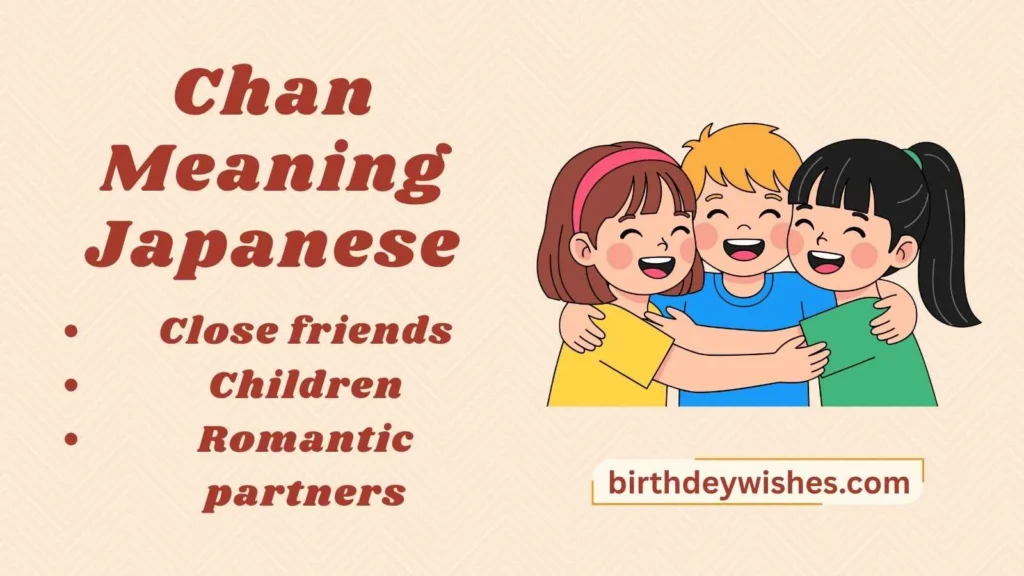
People often use it when talking to:
- Close friends
- Children
- Romantic partners
- Cute characters or pets
Quick examples:
- “Sakura-chan is so kind 💕”
- “Good night, Aiko-chan 😊”
- “You’re so cute, Emi-chan!”
In online spaces, especially among anime fans, “chan” can also be used playfully even with usernames.
👉 Important: It’s not just a word it’s a tone marker that shows warmth and closeness.
Full Form, Stands For & Short Meaning of Chan
“Chan” does not have a full form like many English abbreviations. It is a Japanese honorific suffix, not an acronym.
Short meaning:
- A cute or affectionate way to address someone
- Used mainly for girls, kids, or loved ones
- Expresses closeness and softness
Key points:
- Not slang originally it’s part of Japanese language
- No “expanded version” like LOL or BRB
- Meaning depends on relationship and context
Think of it like saying:
- “sweetie”
- “cutie”
- “dear”
…but attached to a name instead.
Origin, History & First Known Use of Chan
The word “chan” comes from the Japanese language and has been used for centuries. It evolved as a child-friendly variation of more formal honorifics.
Originally, it developed from:
- “-san” (a polite, neutral suffix)
- Children mispronouncing it, leading to softer forms like “chan”
Over time, “chan” became widely accepted as:
- A cute and informal suffix
- Common in families and close circles
In traditional Japanese culture:
- It was often used for young girls
- Also used for babies and pets
Today, thanks to anime and global media, “chan” is now recognized worldwide.
How People Use Chan in Daily Conversations
In real life, Japanese speakers use “chan” carefully. It shows closeness but can sound childish if used incorrectly.
Common uses:
- Talking to children → “Yuki-chan”
- Addressing close female friends
- Showing affection to pets
- Nicknames with a cute tone
Examples:
- “Come here, Hana-chan!”
- “Good job, Miki-chan!”
When NOT to use:
- With strangers
- In formal situations
- With older people or bosses
Using it wrongly can sound disrespectful or awkward.
Chan Meaning Across WhatsApp, Instagram, TikTok & Snapchat
On social media, “chan” has taken on a slightly different life.
WhatsApp:
- Used in friendly chats
- Adds warmth to messages
Instagram:
- Seen in usernames or captions
- Example: “Luna_chan 💫”
TikTok:
- Used in anime edits or fan content
- Often adds a “cute vibe”
Snapchat:
- Casual and playful
- Used among close friends
👉 Online, it’s more relaxed and not strictly cultural.
Different Meanings of Chan in Other Fields
While “chan” mainly comes from Japanese, it can appear in other contexts too.
Other meanings:
- Internet forums: Like “4chan” (a website name)
- Names: Common surname in some Asian cultures
- Pop culture: Associated with anime characters
However, these meanings are separate from the original honorific usage.
Common Confusions, Mistakes & Wrong Interpretations
Many people misunderstand “chan,” especially outside Japan.
Common mistakes:
- ❌ Thinking it means “girl”
- ❌ Using it for strangers
- ❌ Adding it randomly to any name
- ❌ Confusing it with slang
Correct understanding:
- It shows affection, not gender
- It’s about relationship closeness
Similar Terms, Alternatives & Related Slang
Japanese has several honorifics similar to “chan.”
Common alternatives:
- -san → polite, neutral
- -kun → used for boys or juniors
- -sama → very respectful
- -senpai → senior
Comparison:
- “chan” = cute & close
- “san” = safe & formal
👉 Internal linking idea: Link to pages like “kun meaning” or “senpai meaning”
Examples of Chan in Real Chat Situations
Here are some real-style chat examples:
- “Hey Rina-chan, are you coming today? 😊”
- “You did amazing, Yuki-chan! 🎉”
- “Miss you, Aoi-chan 💕”
Group chat style:
- “Let’s go, team! Sakura-chan is ready 🔥”
- “Good morning, Mei-chan ☀️”
How to Reply When Someone Says Chan
If someone uses “chan” with you, it usually means they like you or feel close.
Possible replies:
- “Aww thanks 😊”
- “That’s cute 😂”
- “Call me that again 😄”
Friendly responses:
- “Okay! Then I’ll call you too 😆”
- “Haha, I like that!”
Is Chan Still Popular? Trends & Online Usage
Yes, “chan” is still very popular, especially online.
Why it’s trending:
- Anime and manga popularity
- Social media usernames
- Fan communities
Current trends:
- Used globally, not just in Japan
- Popular among younger users
- Common in fandom culture
Even today, it remains a cute and expressive term.
FAQs
1. Does “chan” mean girlfriend?
No. It shows affection but does not specifically mean girlfriend.
2. Can boys be called “chan”?
Yes, but usually for children or in a cute/funny way.
3. Is “chan” rude?
No, but it can be inappropriate in formal situations.
4. Can I use “chan” online?
Yes! It’s widely used casually on social media.
5. What is the difference between “chan” and “san”?
“Chan” is cute and informal, while “san” is polite and neutral.
Conclusion
“Chan” is a small word with a big meaning. It reflects warmth, affection, and closeness in Japanese culture.
While it started as a traditional honorific, it has now become popular worldwide thanks to anime and social media.
Understanding how and when to use “chan” helps you communicate better and avoid awkward mistakes.