The term demi girl has become more visible online, especially in conversations about gender identity. Many people search for “demi girl meaning” to better understand themselves or support someone they know.
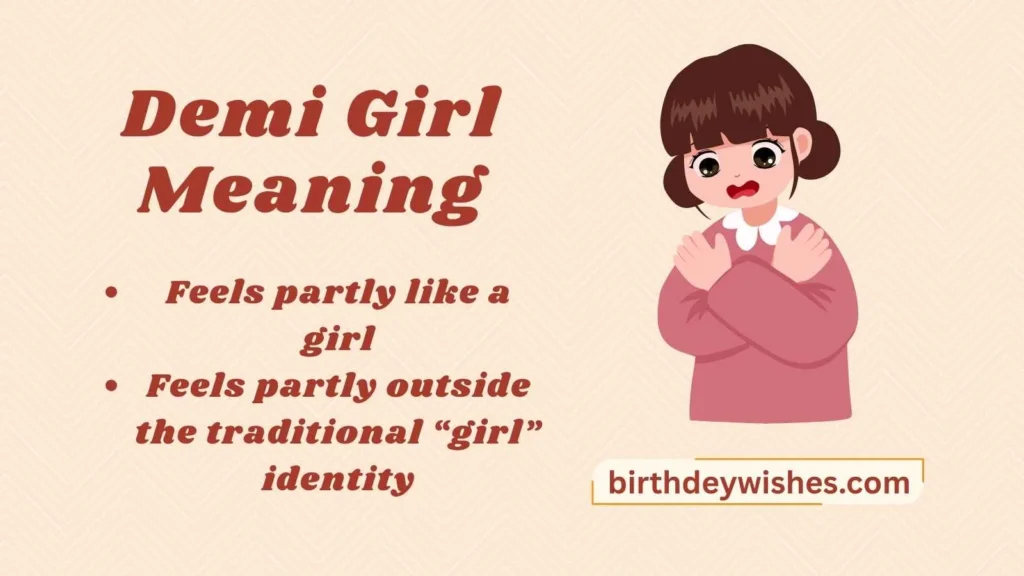
Simply put, a demi girl is someone who partially, but not fully, identifies as a girl or woman. It falls under the broader non-binary spectrum, where gender is not strictly male or female.
As social media grows, so does the use of identity terms like this. That’s why understanding what “demi girl” means, how it’s used, and where it came from is important.
In this guide, you’ll find clear explanations, real chat examples, and practical tips, all written in a simple, friendly way.
What Does Demi Girl Mean in Text & Chat?
In text messages and online chats, demi girl is used to describe a gender identity. It’s not slang or shorthand like “LOL.” Instead, it expresses how someone feels about their gender.
A demi girl usually:
- Feels partly like a girl
- Feels partly outside the traditional “girl” identity
- May also identify with another gender or none at all
Quick chat examples:
- “I recently realized I’m a demi girl 😊”
- “She uses she/they pronouns because she’s a demi girl.”
- “I’m not fully a girl, more like a demi girl.”
In chats, the tone is often personal and respectful. People use the term to share identity, not to joke or exaggerate.
Full Form, Stands For & Short Meaning of Demi Girl
Unlike abbreviations, demi girl does not have a “full form.” It is already the complete term.
Breaking it down:
- Demi = partially
- Girl = female gender identity
Short meaning:
A demi girl is someone who partially identifies as a girl but not fully.
This identity can vary from person to person. Some feel strongly connected to femininity, while others only slightly relate to it.
Origin, History & First Known Use of Demi Girl
The term demi girl comes from online LGBTQ+ communities. It became popular in the early 2010s as more people began exploring gender beyond traditional labels.
Key points:
- Originated in digital communities and forums
- Spread through platforms like Tumblr and later TikTok
- Part of the growing non-binary identity spectrum
As language evolves, new identity terms like demi girl help people explain feelings that older labels could not fully express.
How People Use Demi Girl in Daily Conversations
People use demi girl in everyday conversations to describe themselves or others respectfully.
Common situations:
- Introducing identity
- Explaining pronouns
- Talking about gender experiences
Examples:
- “I’m a demi girl, so I don’t feel 100% female.”
- “They’re a demi girl and prefer she/they pronouns.”
- “Being a demi girl helps me understand myself better.”
The term is usually used in safe, open conversations where identity is respected.
Demi Girl Meaning Across WhatsApp, Instagram, TikTok & Snapchat
The meaning stays the same across platforms, but how it appears can differ.
- Used in private chats
- More personal and direct
Example:
- “Hey, I think I’m a demi girl 💬”
- Seen in bios or captions
- Often paired with pronouns
Example:
- “Demi girl | she/they 🌸”
TikTok
- Explained through videos
- Often educational or storytelling
Snapchat
- Used casually in chats or stories
- Sometimes shortened but meaning stays clear
Different Meanings of Demi Girl in Other Fields
The term demi girl is specific to gender identity. It does not have multiple meanings in other fields like business or technology.
However, confusion may happen because:
- “Demi” can mean “half” in other contexts
- “Girl” is a general word
Together, though, demi girl always refers to gender identity.
Common Confusions, Mistakes & Wrong Interpretations
Many people misunderstand what demi girl means. Let’s clear that up.
Common mistakes:
- ❌ Thinking it’s the same as being a tomboy
- ❌ Assuming it’s “just a phase”
- ❌ Confusing it with transgender identity
Correct understanding:
- ✅ It’s a valid gender identity
- ✅ It exists on the non-binary spectrum
- ✅ It’s different for each person
Similar Terms, Alternatives & Related Slang
There are other gender identity terms related to demi girl.
Similar terms:
- Non-binary
- Genderfluid
- Demiboy
- Agender
Differences:
- Demiboy = partially male
- Genderfluid = identity changes over time
- Agender = no gender identity
💡 Internal linking suggestion:
You can link this section to pages like “non-binary meaning” or “genderfluid explained” for better SEO.
Examples of Demi Girl in Real Chat Situations
Here are realistic chat-style examples:
- “I don’t feel fully like a girl… I think I’m a demi girl 🤍”
- “Oh cool! What pronouns do you use?”
- “She/they. Being a demi girl just feels right 😊”
- “I saw a video about demi girls today!”
- “Same! It helped me understand myself better.”
How to Reply When Someone Says Demi Girl
If someone shares that they are a demi girl, the best response is respectful and supportive.
Good replies:
- “Thanks for sharing that with me 💛”
- “Got it! What pronouns do you prefer?”
- “I support you 😊”
Avoid:
- Questioning their identity harshly
- Making jokes
- Ignoring what they shared
Is Demi Girl Still Popular? Trends & Online Usage
Yes, demi girl is still widely used, especially among younger audiences.
Trends:
- Growing awareness on TikTok
- More visibility in bios and profiles
- Increased discussions about gender identity
The term continues to stay relevant as conversations about identity evolve online.
FAQs:
1. What does demi girl mean in simple words?
A demi girl is someone who partly identifies as a girl but not completely.
2. Is demi girl the same as non-binary?
It is part of the non-binary spectrum but more specific.
3. What pronouns do demi girls use?
Many use she/they, but it depends on the individual.
4. Can someone be both demi girl and another identity?
Yes, gender identity can be flexible and personal.
5. Is demi girl a new term?
It became popular in the 2010s but is now widely recognized online.
Conclusion:
Understanding the demi girl meaning helps create a more inclusive and respectful space online and offline. It describes someone who partially identifies as a girl, offering a label for feelings that don’t fully fit traditional gender categories.
As conversations about identity continue to grow, , terms like demi girl make it easier for people to express who they truly are.
Whether you’re learning for yourself or to support someone else, the key is simple: listen, respect, and stay open-minded. Language evolves, and so does our understanding of identity, and that’s a positive step forward.